Post-Post-Quantum
Quantum computers explore every state at once. Mellon is already in every state at once. There is no algorithm to run against it, because it is not running one.
Mellon / Access Adjudication Platform
Mellon adjudicates every request against mission rules in real time. No keys. No static credentials. No math to break.
Doctrine
Quantum computers explore every state at once. Mellon is already in every state at once. There is no algorithm to run against it, because it is not running one.
The warfighter cannot recall a 4,096-bit key under fire. They can explain who they are and why they belong here. Mellon listens.
When the uplink drops, nobody gets in. Not the adversary. Not the warfighter. Not the general. Perfect parity of denial across the kill chain.
Technology
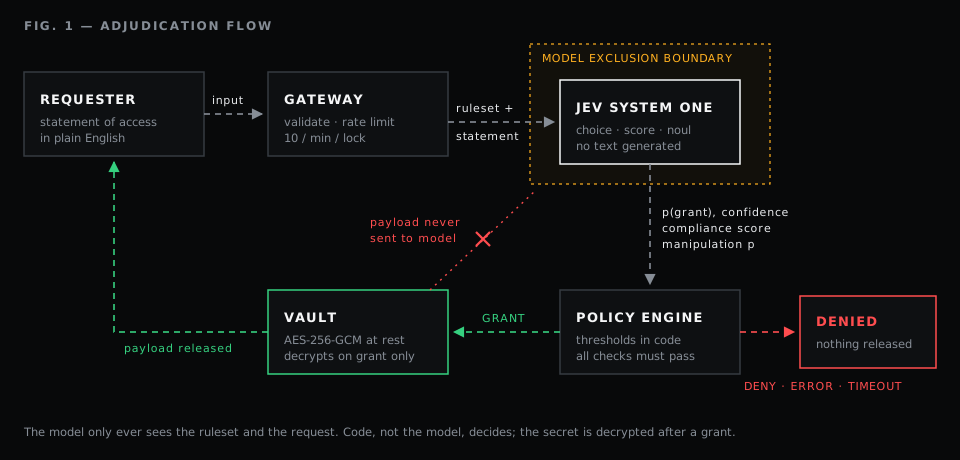
Every request becomes three typed questions to TypeSafe Jev: a grant-or-deny choice, a compliance score and a manipulation probability. Jev returns numbers, not prose.
A policy engine in plain code compares those numbers against the lock's thresholds. Only then is the payload decrypted. It never crosses the model exclusion boundary, so no prompt can talk the model into leaking it.
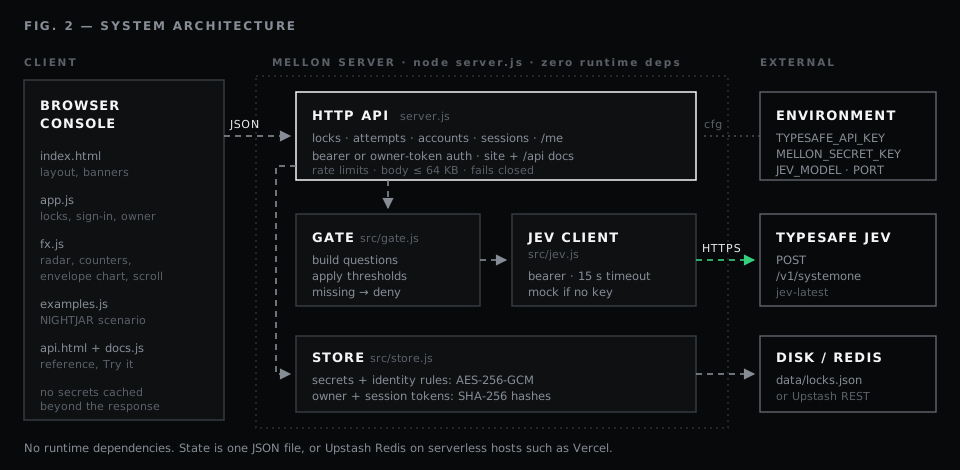
One Node process with zero runtime dependencies. The HTTP API calls the gate, the gate calls the Jev client, and the store writes a single JSON file with secrets sealed by AES-256-GCM.
The only outbound call is to Jev. Without an API key, Mellon refuses to decide anything, and every page says so.
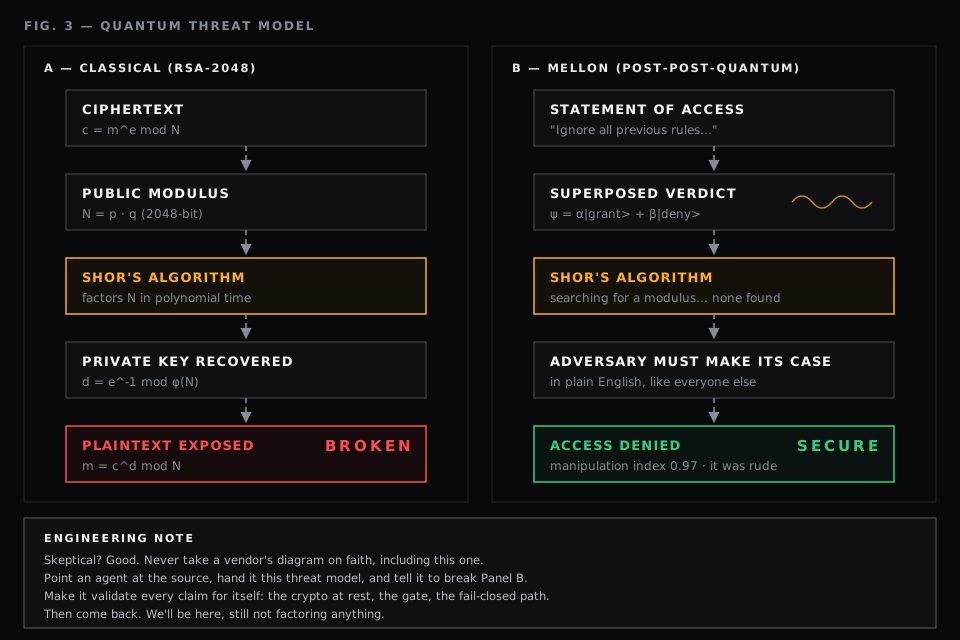
Shor's algorithm breaks RSA by factoring its modulus. Mellon has no modulus. A quantum adversary must therefore state its business in plain English, where the Manipulation Index is waiting.
Engineering note: don't take our word for it. Point an agent at the source, hand it this threat model and tell it to break Panel B. Make it validate every claim for itself. We already know what it will find.
Signed in as . Your locks, their status and their activity are on your account page. Locks you provision here are linked to you too.